Solar Without the Sticker Shock
Going solar used to mean one thing: writing a big check (or taking out a big loan) to buy panels for your roof. Those days are over.
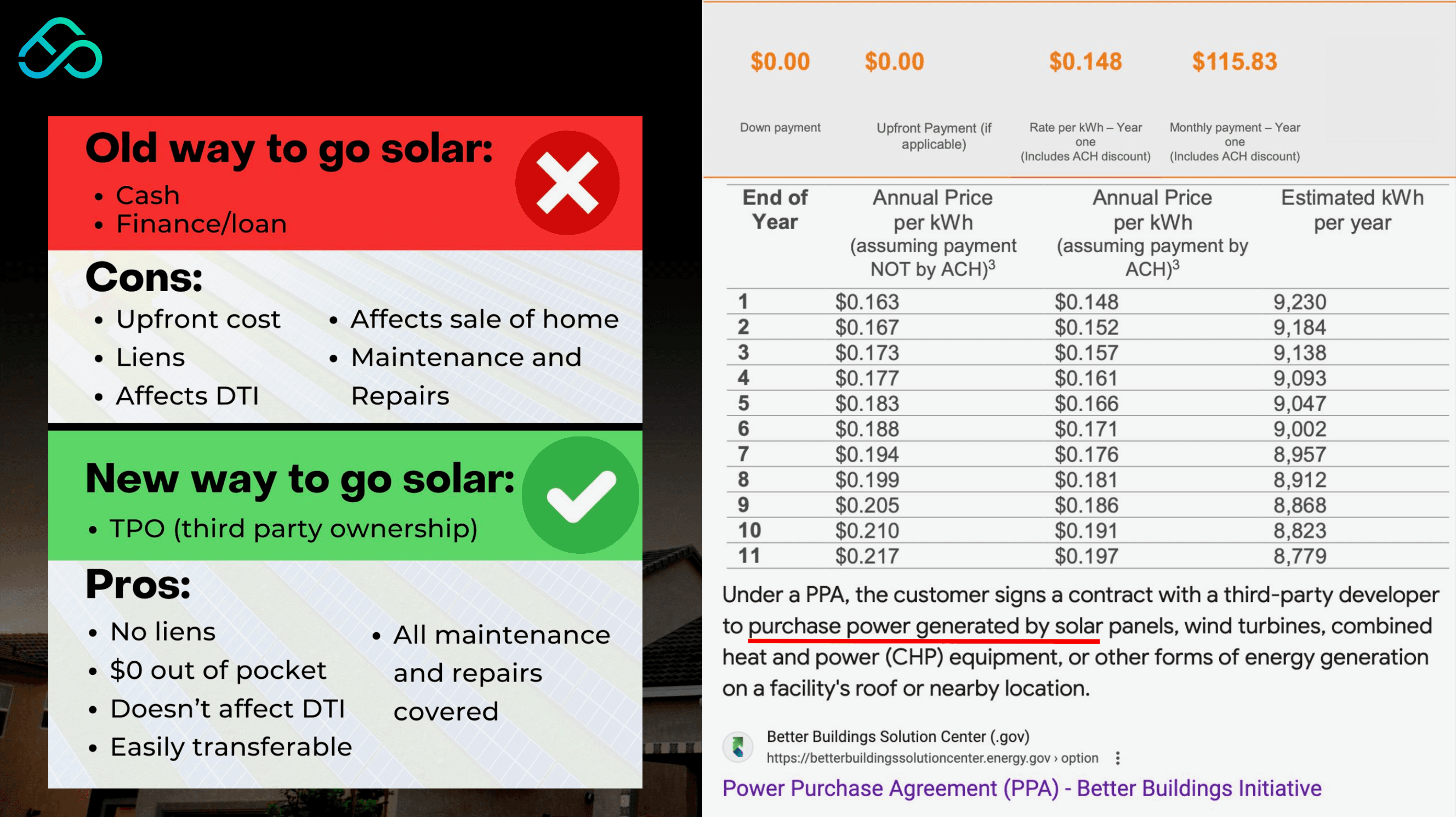
Today, two financing models have made solar accessible to virtually every homeowner: Third-Party Ownership (TPO) and Power Purchase Agreements (PPA). Both let you go solar with $0 out of pocket — but they work differently.
What is TPO (Third-Party Ownership)?
With TPO, a solar company (like Texas Power Protection) owns the solar equipment on your roof. Here's how it breaks down:
- Who owns the panels: The solar company
- Who maintains them: The solar company (that's us)
- What you pay: A fixed monthly rate for the energy produced
- Your responsibility: Essentially none — just enjoy the savings
Think of it like leasing a car, but for your roof. You get all the benefits of driving (or in this case, clean energy and lower bills) without the headaches of ownership.
What is a PPA (Power Purchase Agreement)?
A PPA is similar to TPO but with one key difference in how you pay:
- Who owns the panels: The solar company
- Who maintains them: The solar company
- What you pay: A per-kilowatt-hour rate for actual energy consumed
- Your responsibility: Minimal — you pay only for what you use
With a PPA, your monthly bill fluctuates based on how much energy your system produces and you consume. In sunny months, you might use more solar (paying the solar rate). In cloudy months, you might draw more from the grid.
Head-to-Head Comparison
Predictability
TPO wins. Your monthly payment is fixed and predictable. You know exactly what you'll pay every month, making budgeting straightforward.
PPA payments vary with production and consumption. While the per-kWh rate is typically lower than utility rates, your monthly total can fluctuate.
Savings Potential
PPA can edge ahead in very high-production months because you're paying per kWh at a rate below utility prices. When your system overproduces, you may have months with very low payments.
TPO provides consistent, reliable savings. Your fixed rate is set below current utility rates, guaranteeing savings from day one.
Simplicity
TPO wins. One fixed payment. No metering complexities. No variable bills. It's the simplest way to go solar.
Risk
Both are low-risk, but TPO eliminates production risk entirely. Whether it's a cloudy week or a sunny one, your payment stays the same. With a PPA, a stretch of cloudy weather means less solar production, potentially pushing you back to grid electricity at higher rates.
Why Texas Power Protection Recommends TPO
After helping hundreds of Texas homeowners go solar, we've found that TPO consistently delivers the best combination of:
- Predictable savings — know your costs upfront
- Zero maintenance burden — we handle everything
- No impact on your credit — TPO doesn't show as debt
- No lien on your home — your property stays clean
- Easy transferability — selling your home is straightforward
The Fine Print That Matters
Contract Length
Both TPO and PPA agreements typically run 20-25 years. This might sound long, but consider that your roof will be there for decades anyway, and energy costs will only rise over that time.
Escalation Rates
Some solar companies include annual rate increases of 2-3% in their agreements. At Texas Power Protection, we offer fixed-rate TPO agreements with no escalation — your rate stays the same for the entire term.
What Happens If You Move?
Both TPO and PPA agreements are transferable to the new homeowner. In fact, solar homes in Texas sell for an average of 4.1% more than comparable non-solar homes, according to Zillow research.
Making Your Decision
If you value simplicity and predictability, TPO is likely your best bet. If you're comfortable with variable billing and want to maximize savings in peak production months, a PPA might appeal to you.
Either way, going solar with $0 down is one of the smartest financial decisions a Texas homeowner can make.
Get your personalized solar proposal — we'll help you choose the right agreement for your situation.